

When choosing an iPhone aftermarket battery, the BMS board (Battery Management System board) plays an important role in battery performance. So, what makes a third-party battery board reliable?
In this article, REWA Lab takes you to explore how an iPhone aftermarket battery BMS board is manufactured, from bare PCB assembly and TI chip placement to firmware programming, functional testing, battery cell assembly, and final strict quality inspection.
What Is an iPhone Battery BMS Board?
The BMS board is the control and protection system of a rechargeable battery, helping monitor the battery and protect it during charging and use.
For an aftermarket iPhone battery, the BMS board works alongside the battery cell. While the cell stores the electrical energy, the BMS board manages and monitors important battery-related functions.
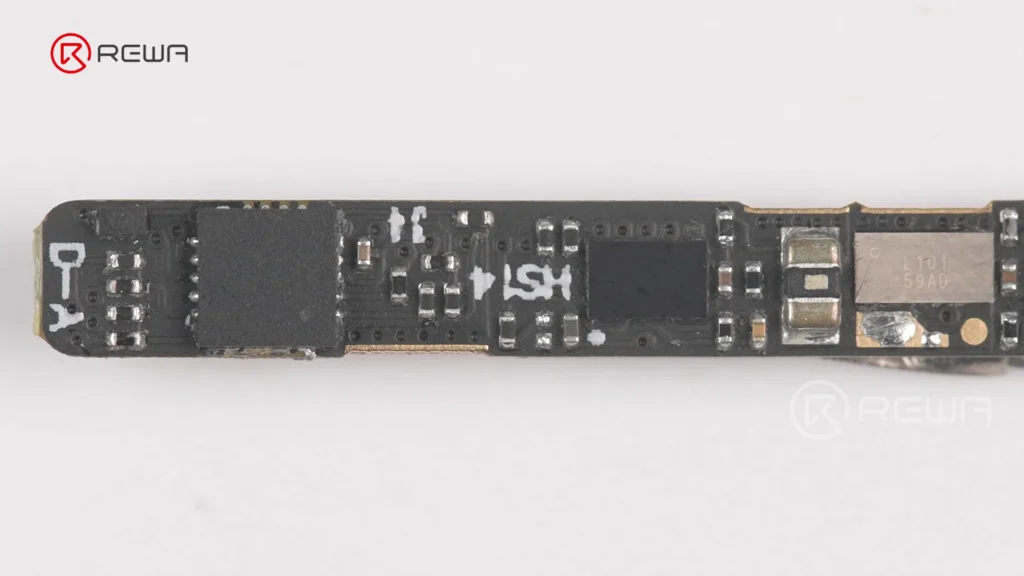
Depending on the design, a battery BMS board can help with functions such as:
- Battery voltage & current monitoring
- Temperature-related protection
- Overcharge & short-circuit protection
- Battery data and state-of-charge estimation
- Communication between the battery and device
This is why two aftermarket batteries using cells with similar specifications can still have different real-world performance and reliability.
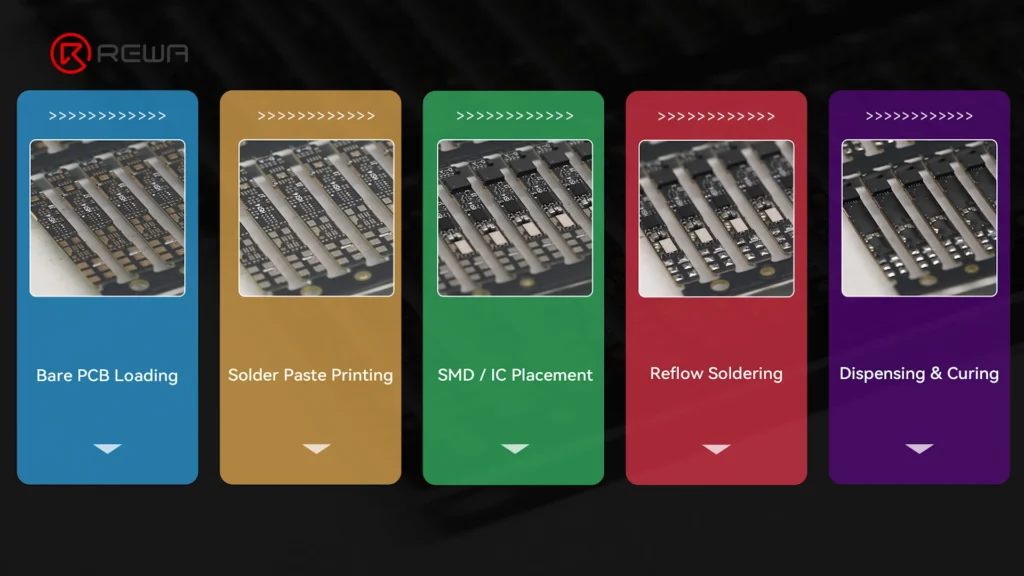
Step 1: Bare PCB Preparation and SMT Assembly
The manufacturing process starts with a bare PCB, which is the foundation of the BMS board. Before production begins, the factory receives bare PCBs that have already passed IQC inspection and loads them onto SMT feeder racks for automated component placement.
Simply put:
SMT stands for Surface Mount Technology. It is a manufacturing method that places tiny electronic components directly onto the surface of a circuit board.
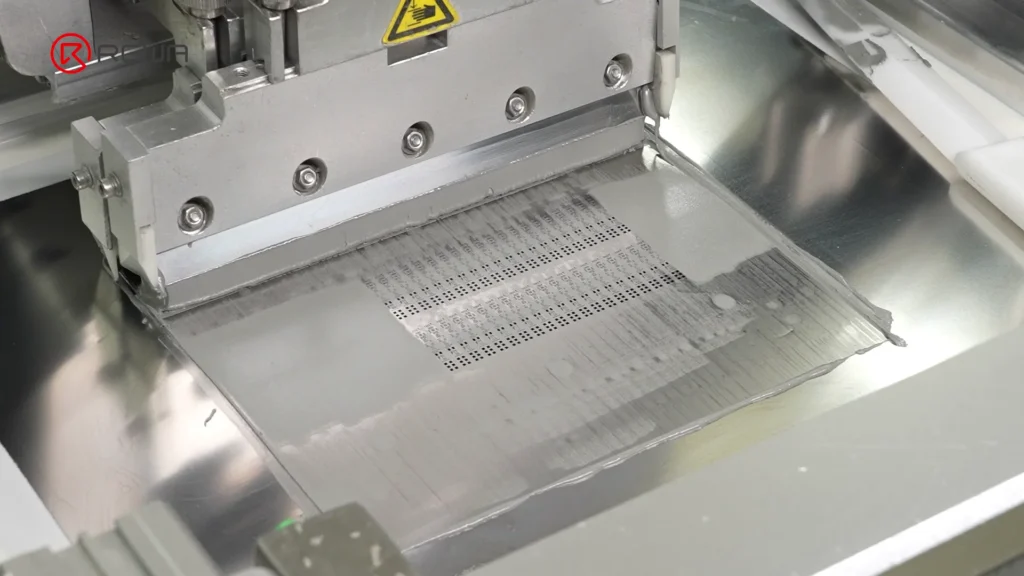
The basic process begins with solder paste printing. The PCB is positioned against a stencil, and solder paste is applied to precisely defined positions on the board.
Infrared marking helps identify the positions of the solder pads, while an SPI system checks the printed solder paste to identify issues such as:
- Solder paste offset
- Insufficient solder paste
- Excessive solder paste
- Solder bridging
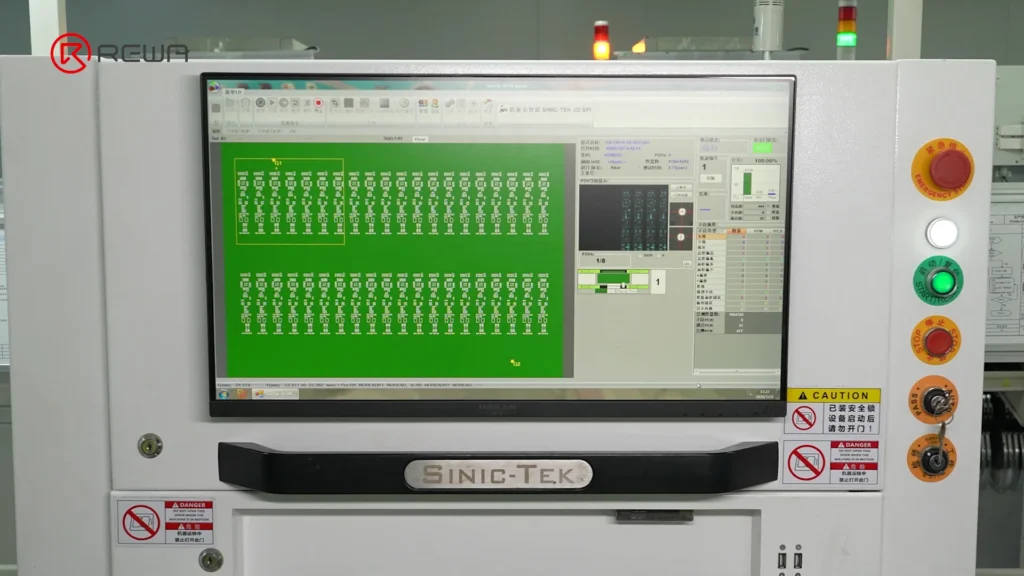
This inspection is important because inaccurate solder paste printing can affect the quality of component soldering later in the process.
Step 2: High-Speed Component Placement
After solder paste printing, SMT machines precisely place resistors, capacitors, inductors, and other components onto their designated positions on the PCB.
High-speed nozzles pick up individual components and place them according to the programmed layout of the PCB. Infrared reference marks help the equipment maintain accurate positioning.
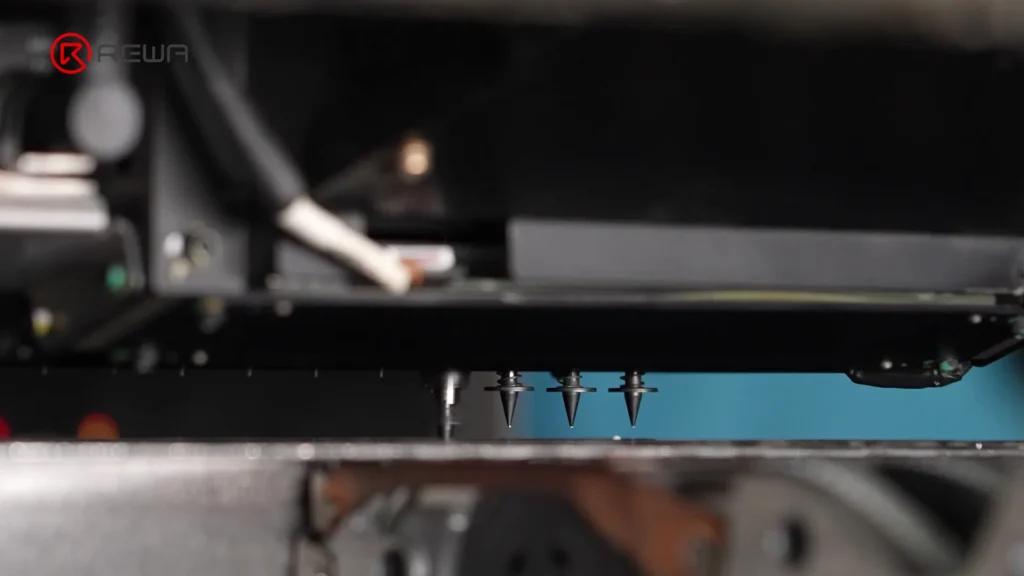
For battery BMS boards, precise component placement is essential because the board contains many small components within a compact design.
Step 3: Installing the TI Battery Management Chip
One of the key components on the board is the TI chip. As a key control component of the battery management system, it serves as the “brain” of the BMS, helping monitor and manage battery performance.
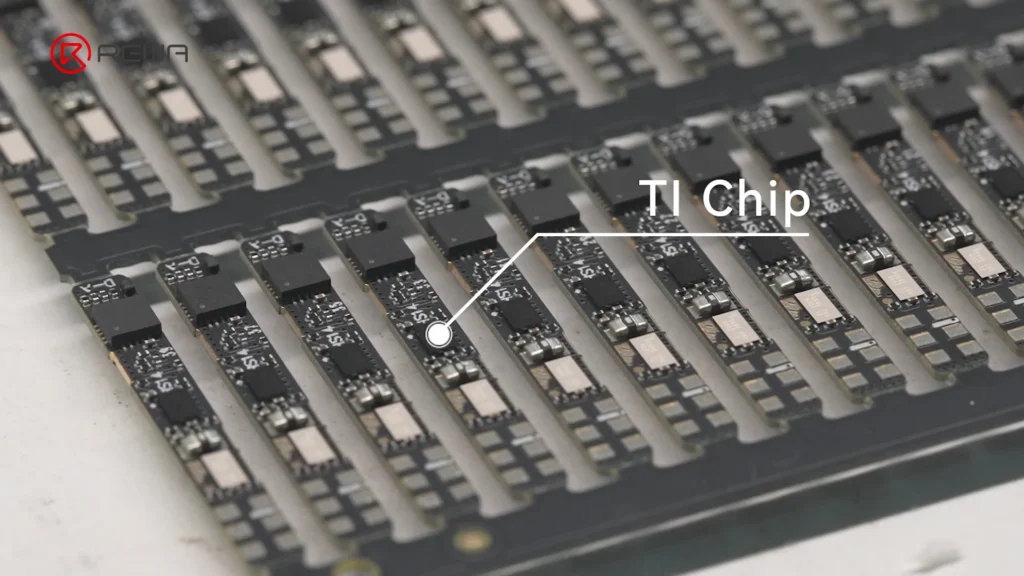
The REWA Selected battery board uses a custom TI chip with an Impedance Track algorithm.
Simply put:
The algorithm helps the battery system estimate the battery’s remaining capacity more accurately by tracking the battery’s electrical characteristics, including impedance.
Battery impedance changes as the battery operates and ages. Monitoring these characteristics allows the battery management system to make more informed estimates of the battery’s actual state.
Step 4: Reflow Soldering and AOI Inspection
Once the components have been placed, the PCB enters the reflow soldering process. The board passes through a controlled thermal profile consisting of preheat, soak, reflow, and cooling stages, permanently connecting the components to the PCB.
Afterward, the board undergoes AOI (Automated Optical Inspection) scanning.
Simply put:
AOI uses cameras to inspect the board automatically and compare the soldered components and joints against predefined standards or a golden sample.
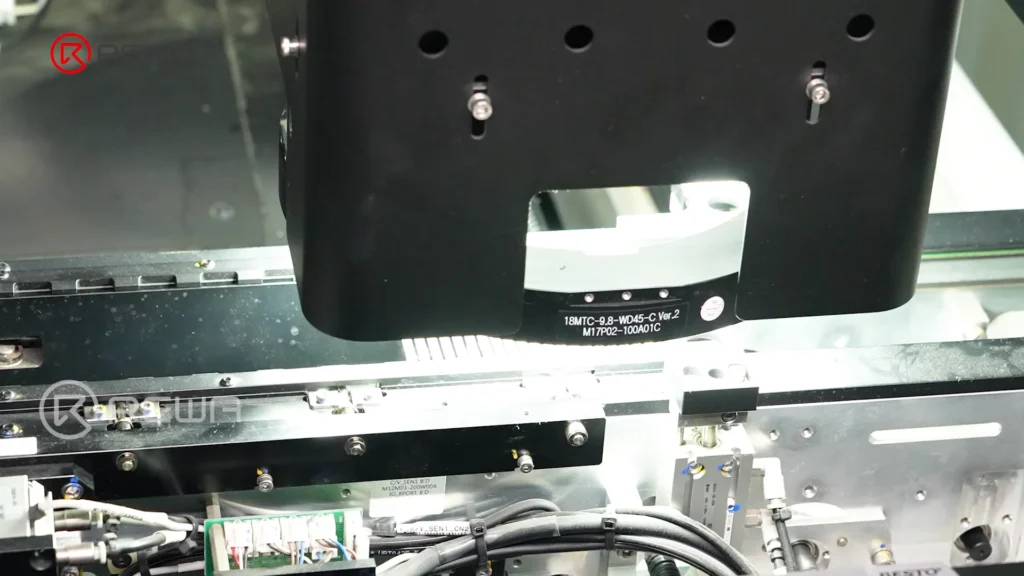
If the system identifies an NG (No Good) board, the board is manually reviewed to separate real defects from false positives.
Step 5: Underfill Reinforces BGA Component Connections
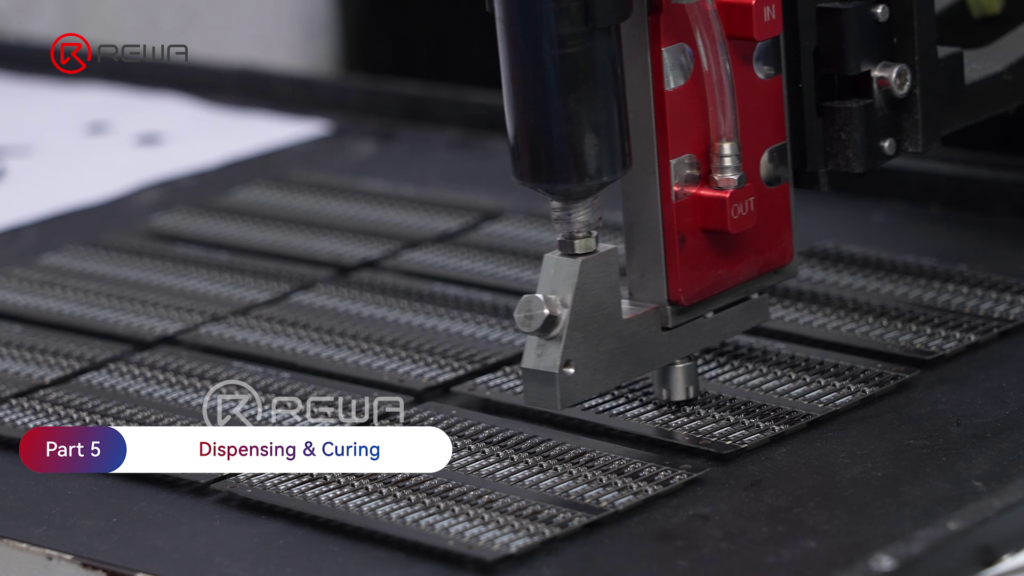
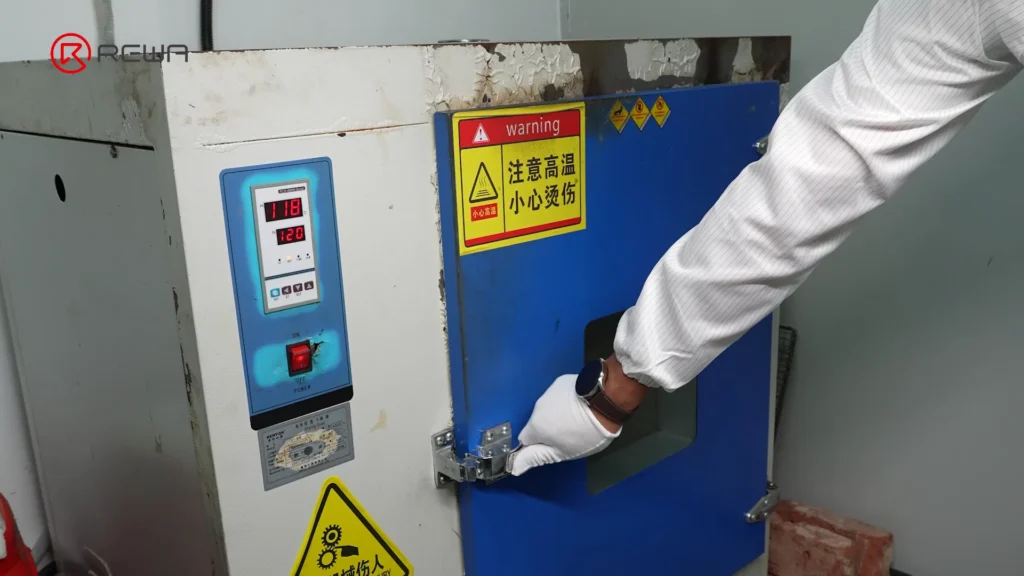
After solder inspection, automated equipment applies underfill along the edges of BGA components before the adhesive is cured in an oven, which helps provide additional mechanical support.
For battery BMS boards, this stage can improve resistance to physical shock and vibration, helping strengthen the connection between the component and PCB during handling and use.
Step 6: Firmware Programming and Flex Cable Bonding
The completed PCB is programmed with firmware before its flex cable is bonded using controlled heat and pressure. To put it simply, firmware is the embedded software that controls how the hardware operates.
How do the controlled heat and pressure achieve?
Through a hot-bar bonding process, the controlled heat and pressure are used to bond the flex cable to the PCB.
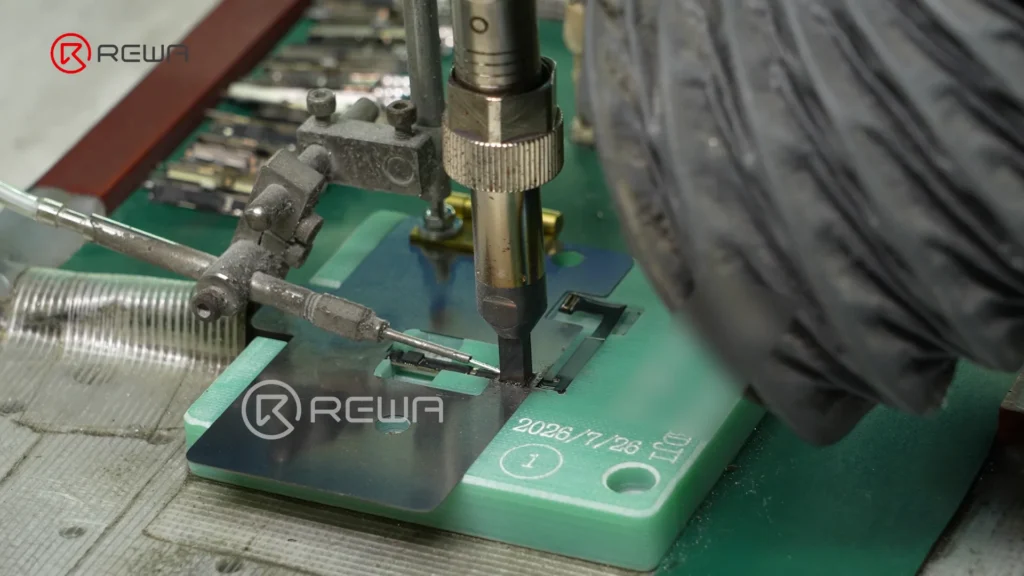
After bonding, the flex cable connection is verified through FCT (Functional Circuit Test) to check whether the assembled board actually functions as intended.
Step 7: Battery Cell and BMS Board Assembly
In the assembly stage, the factory first uses capacity-matched cells. The cell tabs are then cut before the cell is connected to the BMS board through fiber laser spot welding.
Why Is Weld Quality Important?
The weld connects the battery cell to the BMS board, so the quality of this connection directly affects the electrical and mechanical integrity of the battery pack.
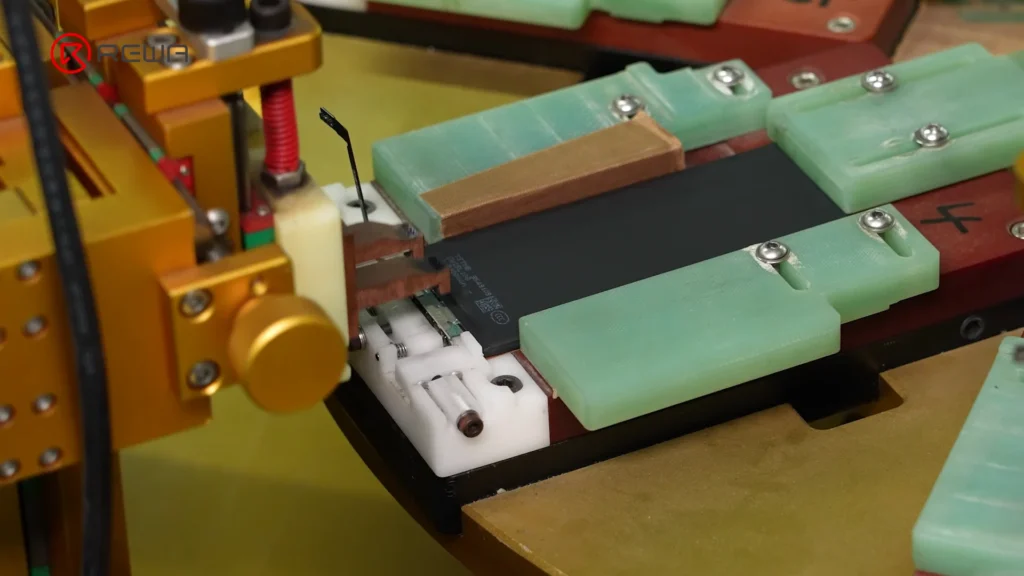
After welding, each weld joint is checked for durability. The battery pack then receives insulation tape and a rubber casing as part of the assembly process, helping provide both electrical insulation and physical protection.
Step 8: Final Quality Inspection and Battery Testing
Manufacturing does not end when the battery pack is assembled. A strict final quality inspection is performed before the battery is considered ready for shipment.
After final inspection, the battery enters a resting period, during which parameters such as voltage and internal resistance are monitored.
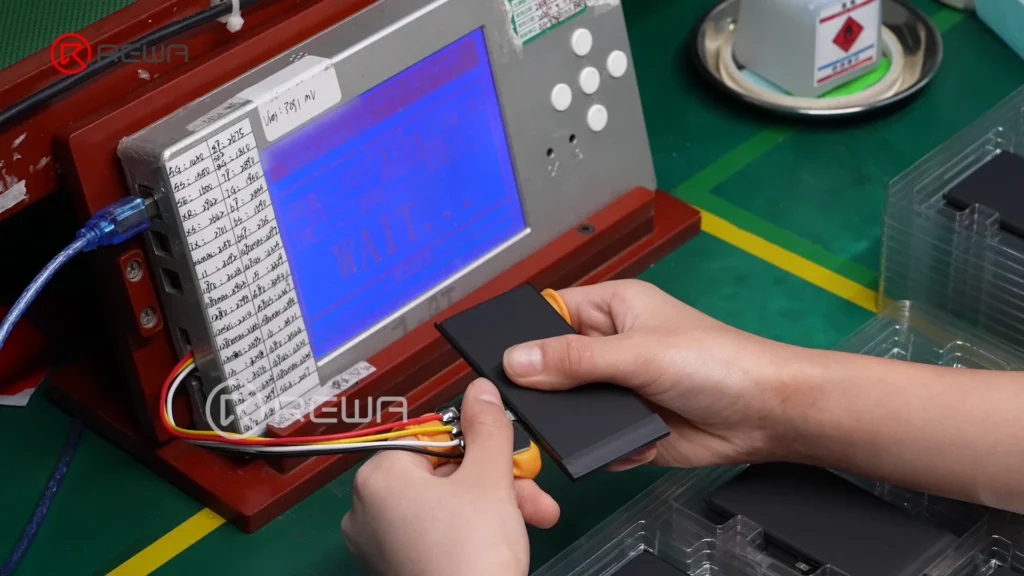
Monitoring voltage and internal resistance during the resting period provides additional data for quality control.
Why the BMS Board Matters for Aftermarket iPhone Batteries
The BMS board is often hidden inside the battery, so it is easy to overlook when comparing aftermarket batteries. However, its design and manufacturing quality can influence important aspects of battery operation.
A reliable third-party battery requires more than simply selecting a battery cell with the right capacity. The cell, BMS board, firmware, electrical connections, protection circuitry, manufacturing process and strict quality test before shipping all work together.
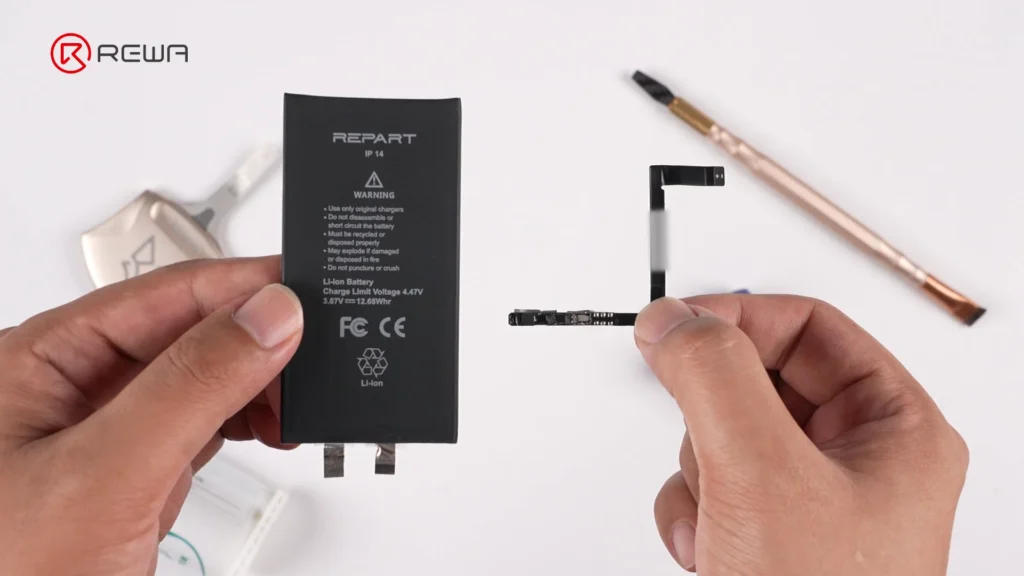
For distributors, refurbishing facilities, and repair shops, this means that battery evaluation should go beyond looking at the printed capacity or external appearance.
Frequently Asked Questions
What is the difference between a battery cell and a BMS board?
The battery cell is the component that stores electrical energy. The BMS board is the electronic management and protection system that monitors the cell and controls related battery functions.
What is a TI chip in a battery BMS board?
TI refers to Texas Instruments, a semiconductor manufacturer whose battery-management ICs are used in various battery applications. In the REWA Selected battery board shown in the video, a custom TI chip with an Impedance Track algorithm is used to support accurate battery monitoring and gauge estimation.
Why are SPI and AOI inspections important?
SPI checks the accuracy of solder paste printing before components are soldered, while AOI uses cameras to inspect the assembled PCB and solder joints afterward. These inspections help identify manufacturing issues at different stages of PCB production.
Why does REWA test battery voltage and internal resistance after assembly?
Voltage and internal resistance provide important information about the electrical condition of a battery pack. Monitoring these parameters after assembly and during the resting period adds another layer of quality control before the battery is shipped.
Why measure internal resistance during final quality inspection?
Internal resistance is one of the important electrical characteristics of a battery. Lower internal resistance generally means less electrical energy is lost inside the battery when current flows, although battery performance cannot be judged by this parameter alone.
Conclusion
An aftermarket iPhone battery is more than a battery cell. Behind the finished product is a BMS board that integrates electronic components, battery-management technology, protection functions, firmware, and flex-cable connections.
From a bare PCB to a complete battery pack, every stage can contribute to the consistency and reliability of the finished battery.
By combining rigorous quality control process with technical support, REWA Technology is committed to developing high-standard aftermarket battery solutions for professional repair businesses worldwide. If you have any question, please feel free to contact us.




 English
  Español
  Français
  Deutsch
  Italiano